Science & Higher Education Policy
Key Strategic Directions and Achievements in Science and Higher Education
📅 November 2026
•
📍 Republic of Kazakhstan
In line with the directives of the Head of State, Kazakhstan is systematically expanding access to higher education, enhancing student welfare, strengthening global academic partnerships, integrating artificial intelligence, and advancing scientific research.
🎓 Higher Education, Student Support & Global Cooperation:
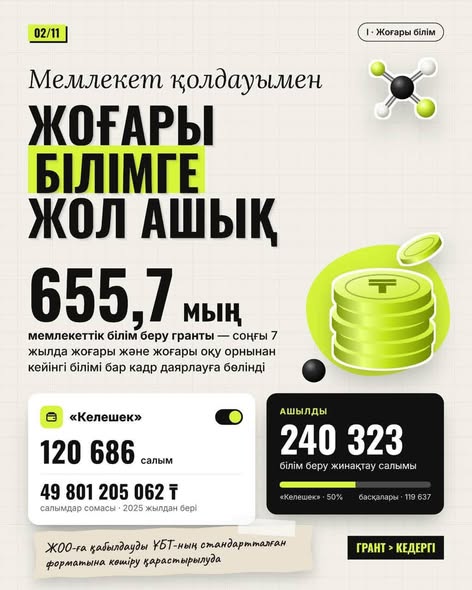
- Access to Higher Education: Over the past seven years, 655,700 state educational grants were allocated, and over 240,000 educational savings accounts were opened.
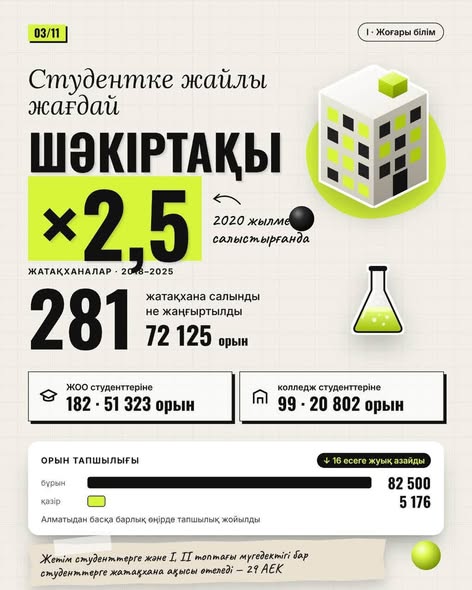
- Student Welfare: Student stipends doubled compared to 2020. Between 2018 and 2025, 281 dormitories providing 72,125 beds were built or renovated, reducing the housing shortage nearly 16-fold.
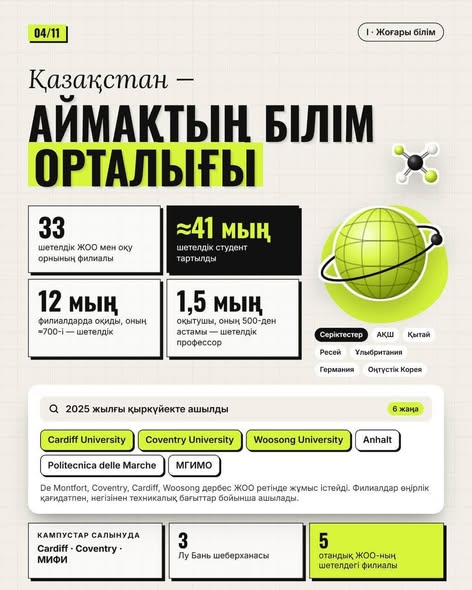
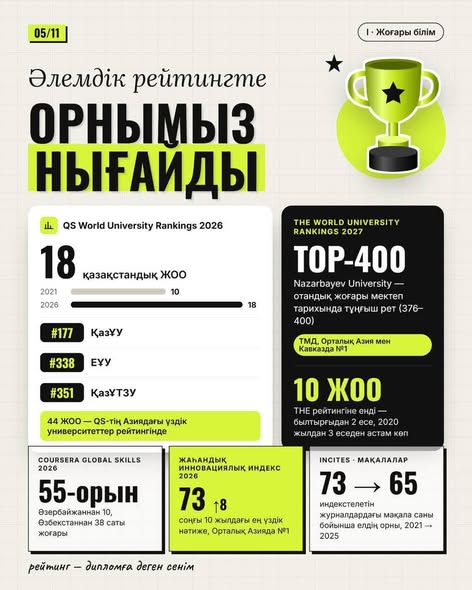
- International Collaboration: 33 branches of foreign universities opened in Kazakhstan, bringing international enrollment close to 41,000 students. 18 Kazakh universities ranked in QS World University Rankings 2026.
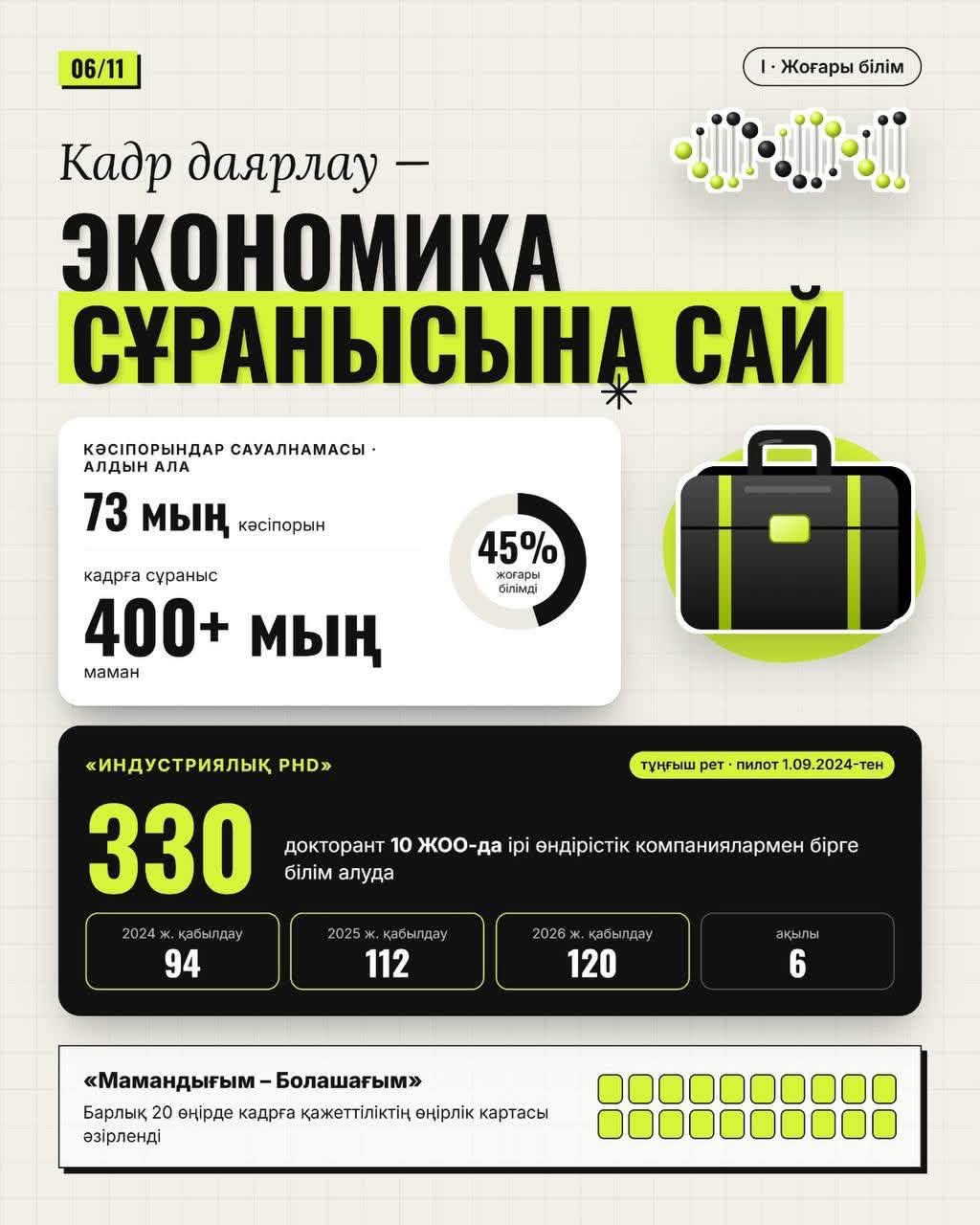
- Workforce Alignment: Under the “My Profession – My Future” initiative, regional workforce demand maps were developed across 20 regions.
🔬 Artificial Intelligence & Research Ecosystem:
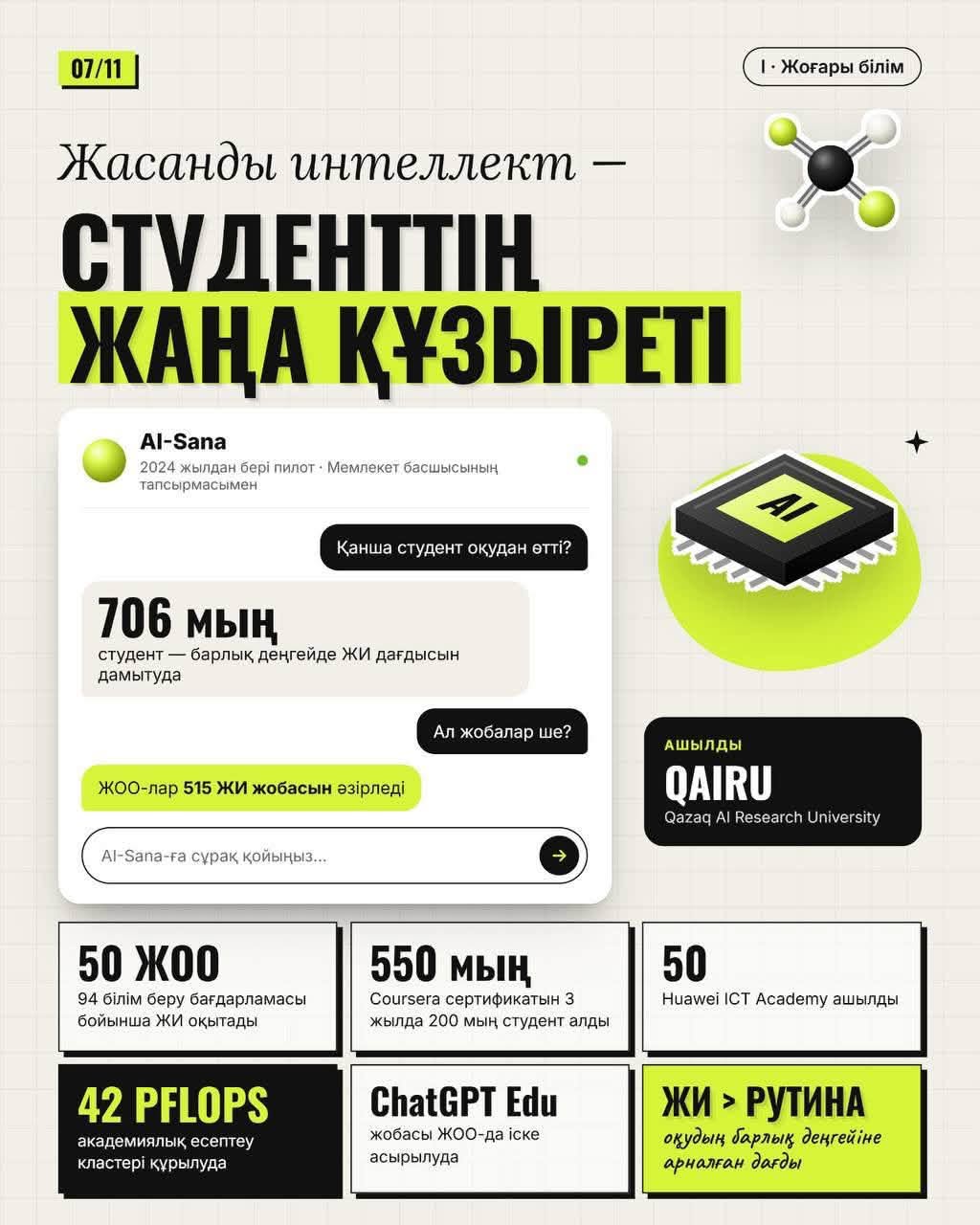
- AI Integration: 44 AI degree programs operate across 31 universities. Under the AI-Sana program, 706,000 students received training and 515 AI projects were developed.
- Research Funding: Domestic R&D expenditure rose 3.2-fold between 2019 and 2025, reaching 261.5 billion KZT.
- Support for Researchers: The number of young researchers reached 14,323, with 812 young scientists provided housing support.
- Scientific Infrastructure: Three science cities are planned to be established in Almaty, Kurchatov, and Astana by 2035.
These strategic measures aim to elevate higher education quality, strengthen research capacity, and build competitive human capital for Kazakhstan. 🇰🇿🎓🔬